It’s time to break free from the siloed, centralised straitjacket of public spending. That’s the bold message from the Institute for Government’s latest report, which urges a radical rethink of how money flows through public services.
Instead of ringfenced budgets and top-down controls, the report – The Case for Total Place 2.0 – calls for a return to joined-up local decision-making, where councils, the NHS and other local bodies collaborate to meet the real needs of their communities.
“a rare win-win that today’s system urgently needs”
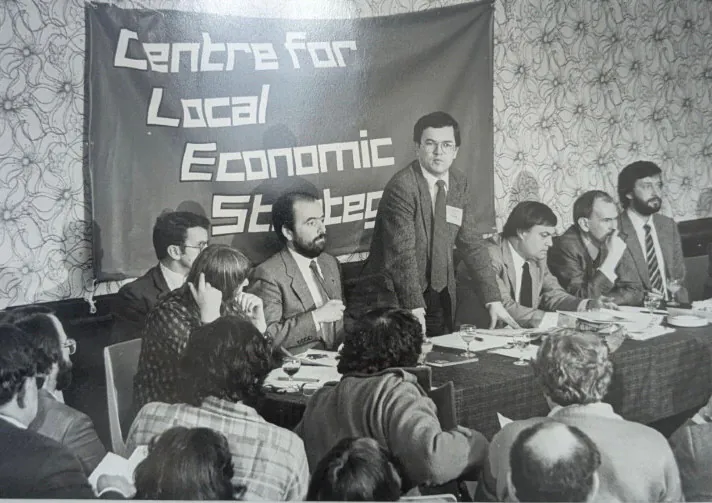
The OG Total Place – an ambitious initiative first launched by Gordon Brown’s Labour government in 2009 – empowered local agencies in 13 pilot areas to pool resources, tackle complex problems together, and deliver smarter, more human solutions. The results? Better outcomes for residents and long-term savings – a rare win-win that today’s system urgently needs to rediscover.
Since the cancellation of Total Place and the introduction of austerity at the hands of the Coalition government, while many of our local challenges remain the same, if not considerably worse, our local institutions have – per necessity – been quietly finding their own way to replicate its successes. Notably, they have done so without direction from Whitehall, in the process avoiding some of the pitfalls of the original approach, which were often felt – like many local devolution pilots – to be bureaucratic and failed to seize the opportunity to develop and strengthen relationships between local public sector actors.
In the last 15 years, CLES has had the privilege of working alongside public sector institutions across the length and breadth of the UK who have pioneered a local approach to tackling inequalities using the community wealth building model. So called “anchor institutions” – councils, hospitals, universities, colleges, housing associations and other partners in place from the private and VCSE sectors – have been using their considerable assets – their spending power, land and other influence – to tackle the problems being faced in their places.
“forging their own model for […] a revival of Total Place”
Working together, as “anchor networks”, institutions in large cities like Leeds, Glasgow and London, towns such as Wigan and Morecambe Bay and whole counties like Dorset, have already been forging their own model for what a revival of Total Place would look like. In recent years, they have been collaborating to identify and develop the priority issues for their areas and using their combined spending, land and buildings to have a greater impact than the sum of their parts.
In Birmingham, one of the original pilot locations for Total Place, CLES has supported the Birmingham Anchor Network to develop creative, collaborative approaches to meet public sector employment needs and address inequalities. ICan – a progressive employment programme led by Birmingham & Solihull ICB, and delivered by University Hospitals Birmingham, The Pioneer Group and Birmingham City Council – matches unemployed residents to entry-level NHS jobs through a pre-employment training programme. More recently, three Birmingham further education providers have teamed up with local housing associations to open community learning hubs in disadvantaged areas that are also linked to a consortium of local public and private employers to match and update training to meet local employment opportunities.
“a greater recognition of place in decision making”
Meanwhile, while local authorities and their partners have been creating anchor networks, the government too has been making moves towards a greater recognition of place in decision making, through the advent of English devolution and trailblazer deals – all aiming to enable the pooling of funding and joint commissioning to tackle complex challenges more effectively via city regions.
And where do communities sit in this picture? IfG and others who have advocated for a return of Total Place have called for citizens to be involved in shaping decision making on the future of their local public services – something that CLES supports as a member of the Total Place Network.
“learning the lessons of the past”
Truly delivering on this, though, will require more resource than it seems the government are willing to part with, at least based on the mood music of recent proposals. To succeed, Westminster and Whitehall must commit to creating the conditions for a place-based approach which reflects local challenges and governance, rather than imposing specific mechanisms. In an age of efficiencies and AI-enhanced approaches to government, this will require a step back to remember that supporting meaningful relationships between our public servants and citizens is the key to learning the lessons of the past.
Are we at a tipping point for Total Place? Only time will tell, but one thing is for sure – after 15 years of austerity our local public services are on their knees. The government has little choice: it needs to reshape them for our new reality, and fast – so why not borrow a good idea from the past?
Anchor networks are emerging as a practical successor to the original Total Place programme, enabling local institutions to pool resources, tackle inequalities and shape services collaboratively. With austerity-strained services and growing devolution, place‑based, community‑involved approaches offer a route to smarter, locally driven public service reform—if government provides supportive conditions.