The campaign is however not starting from scratch. Salford, over the course of the last five years has been at the forefront of progressing an approach where social value is at the heart of all policy and practice. Salford has developed a social value policy; developed a social value alliance, embedded social value measurement into local authority and other institutional procurement practices; and assessed the social value related impact of organisations across the Voluntary Community and Social Enterprise (VCSE) sector.
The approach to social value has been framed by a number of important principles. First, the approach has been framed by cooperation, so the public, commercial and social sectors working together. Second, the approach has been framed by recognition of the scale of the challenge facing Salford around poverty and inequality and a desire to address them. Third, the approach has been framed by strong leadership across sectors and a real affinity to Salford as a place. And fourth, the approach has been framed by evidence and data around existing metrics around social value.
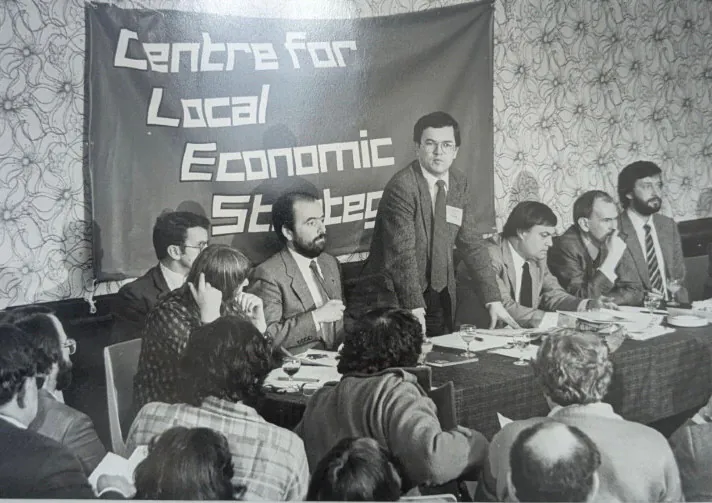
The Centre for Local Economic Strategies (CLES) has been involved in a number of guises in the development of approaches to social value in Salford. We developed an initial report looking at the principles of social value which supported the development of the Salford Social Value Alliance. We wrote aspects of Salford City Council’s social impact study, notably around the impact of supplier and employee spend. We undertook the evaluation of the Salford Third Sector Grants Fund Programme. And we have been part of the steering group which has developed the 10% better campaign.
It is important to note that the 10% better campaign is just one component of Salford’s approach to social value and that change around social value is going to take time. The campaign is a starting point to progressing a better, more economically prosperous, a more socially responsible, and a more environmentally friendly Salford. The City of Salford needs to continue at pace with its principles of cooperation, addressing challenges, strong leadership, and evidence to enable social value to be embedded into policy and practice and enhanced.
Matthew Jackson is the Deputy Chief Executive of the Centre for Local Economic Strategies (CLES). He is a steering group member for the Salford 10% better campaign.