CLES at 40: rewiring the future of local economies
In the kitchen of the CLES offices in Manchester sits a framed black-and-white photo of the first meeting of CLES,…
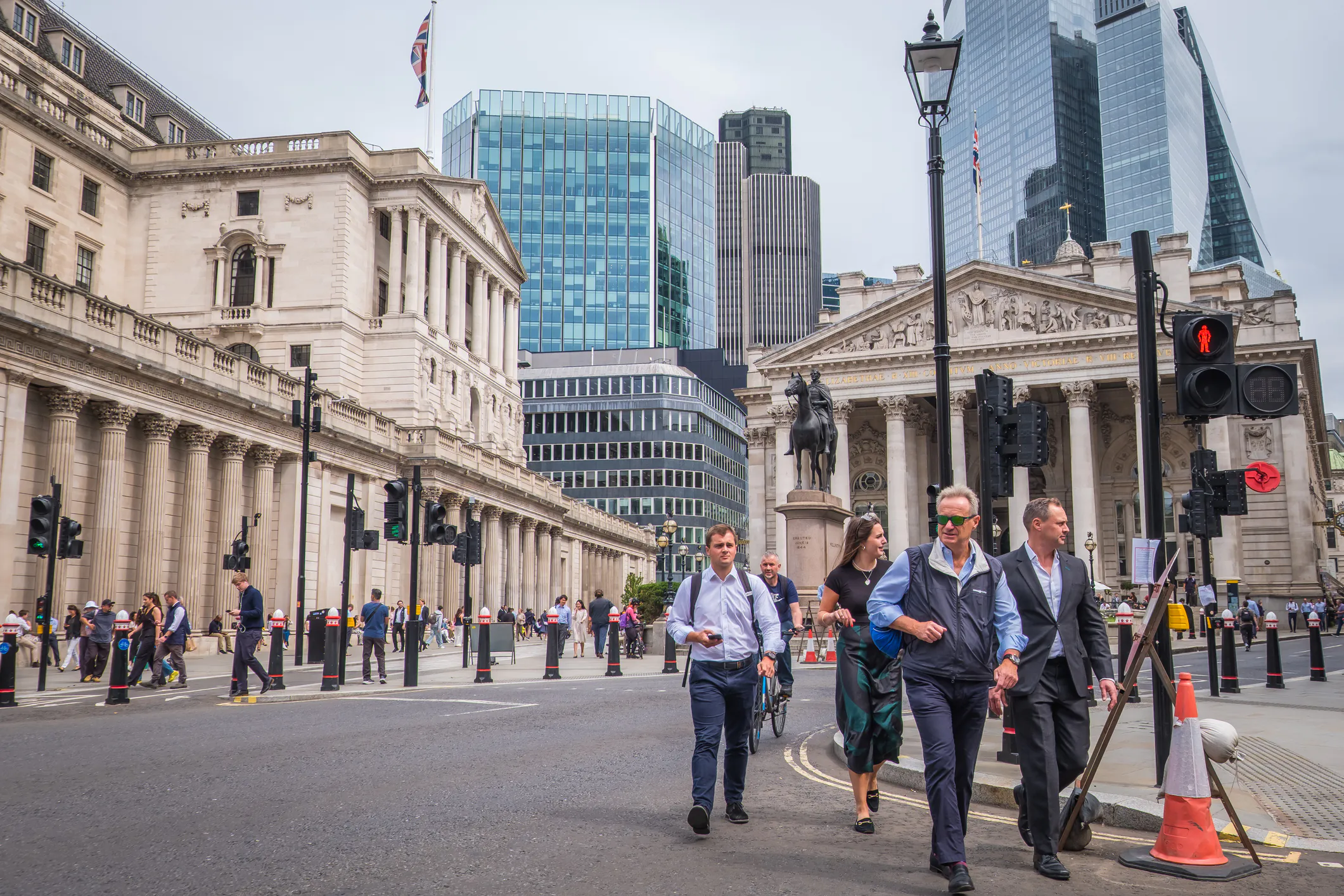
“I promise to pay the bearer on demand the sum of ten pounds”, reads the creased tenner in my wallet. I have never queued in Threadneedle Street to see whether the chief cashier of the Bank of England would honour that promise. Yet I trust she would.
And despite the creases in that tenner, its value remains undiminished. That value does not sit in the polymer on which it is printed, but in the shared belief that the promise will be kept. In this sense, trust is not emotional. It is the infrastructure on which our economy operates.
Public institutions make similar promises every day, often implicitly rather than explicitly. We promise stewardship, fairness and continuity. We promise that the taxes people contribute will be translated into services when they need them. Where those promises feel credible, trust grows. Where they do not, trust erodes; sometimes loudly, but more often quietly, through repeated experience.
I work in an economically deprived, but culturally rich, rural and coastal community. Like many rural and coastal places across the UK, West Wales faces longstanding structural challenges: poverty, inequality, an ageing population and a shrinking working age base. These pressures shape access to services, labour markets, housing, transport and opportunity.
Geography matters. Rurality amplifies distance from power and decision making. Inequality is experienced not only between people, but between places. Value is often extracted through supply chains, ownership structures and investment decisions that return little locally. Over time, this shapes how institutions are perceived, not necessarily through single catastrophic failures, but through accumulated signals about who benefits, who bears risk, and whose voices matter.
This year is the tenth anniversary of the Brexit vote. A vote which was a demonstrable rejection of the status quo. Brexit may not have offered a coherent solution, but it revealed the depth of disconnection many people felt from institutions that no longer seemed responsive, accountable or rooted in place.
Building trust will not be achieved through better messaging or persuasion. It will be through redesigning systems so that people can once again see a future for themselves in the places they live. In the words of Bertrand Russell, we must create the conditions that make hope seem rational. Trust is an outcome of the systems we design.
To do that, we must act deliberately.
Money works because its promise is visible and understood. A tenner is worth a tenner, no less and no more. Public institutions often rely on implicit promises, yet rarely state them plainly leaving room for misaligned expectations.
Trust grows when institutions are clear about what they exist to do, what they cannot do, and what people can reasonably expect over time. Clarity reduces disappointment, makes accountability possible, and turns vague reassurance into something tangible.
Trust is strengthened when systems are clear on their purpose and values, and are designed so that aligned behaviour is easy and misaligned behaviour is hard. Too often, institutional failure is attributed to individuals, when the deeper cause lies in weak design: opaque decisions, blurred accountability and incentives that reward reassurance over truth.
Good design rests on clear ethical foundations. The Nolan Principles of selflessness, integrity, objectivity, accountability, openness, honesty and leadership are not abstract ideals. They are practical design requirements. They demand transparency in how decisions are made, clarity over who is accountable, openness to challenge and governance that surfaces risk early rather than hiding it.
When systems are designed this way, trust does not rely on exceptional people. It becomes a property of the institution itself.
Trust is relational and it accumulates locally. People trust institutions they can see, question and influence. They mistrust systems that feel distant, even when intentions are good.
Retaining value locally matters. Jobs that stay, skills that build, spending that circulates and assets that remain rooted all make institutional benefit visible. When people can see tangible local return, trust becomes grounded in lived experience rather than abstract assurance.
Participation builds trust faster than persuasion. People understand trade offs when they are genuinely involved in shaping decisions that affect their lives.
Designing services from the outside in, rather than the inside out, does not guarantee perfect outcomes. But it does create legitimacy. Even when progress is slow or imperfect, shared ownership of decisions sustains trust in a way top down delivery rarely can.
Leadership is not morally neutral. Decisions often spend trust to buy short term control or reassurance. Sometimes that is unavoidable, but doing so unconsciously is dangerous.
Trust is rarely lost evenly. When it is depleted, the cost is often borne by the most vulnerable. Leadership responsibility therefore lies in understanding whether our choices draw down trust or invest in it, and in acting with that awareness.
We will never be perfect in this endeavour, but we can always improve. Like the tenner in my wallet, investing in these acts will compound the value of trust over time.
Huw Thomas is a Trustee for CLES, is the Executive Director of Finance for Hywel Dda University Health Board, and an Honorary Professor at Aberystwyth University. The views expressed are his own.
Want to make your local economy fairer and stronger? Talk to us – we’re here to help you make change happen.
For press enquiries please reach out to us on rosielockwood@cles.org.uk, or by calling 07802 453340
Contact us