Aligning community wealth building with just transitions
This workshop guide is the product of a major two-year international research partnership funded by the British Academy, led by…
Periods of global instability are increasingly felt through local economies. The unfolding events involving Iran are the latest in a series of shocks with far-reaching economic consequences. First and foremost, this is a senseless human tragedy, marked by profound pain, loss and disruption for people whose lives are shaped by forces far beyond their control. But while turning to economic impacts can feel uncomfortable in this context, it is unavoidable. These shocks do not remain distant or abstract; they are experienced in our communities, shaping prices, supply chains and everyday choices. For those working in local place, the growing impacts of global uncertainty on people’s lives are already clear. As global crises have become a more permanent feature on the global landscape, the cost of living is no longer a temporary crisis but part of the status quo. In that context, the question is not how we ‘bounce back’ to a fragile model, but how we rebuild local economies in ways that make them more resilient over the long term.
Our current moment of geopolitical and economic turmoil sits within a longer sequence of shocks that have defined economic life over the past decade and a half: the global financial crash, the pandemic and the inflationary surge of 2022. Together, they point to a world in which instability is no longer exceptional. Long‑term economic predictability can no longer be assumed.
Climate breakdown is a critical part of this picture. Extreme weather events and ecological disruption are already driving volatility in food and energy prices, undermining livelihoods and intensifying geopolitical tensions. Economic fragility and climate instability are not separate challenges; they are deeply intertwined and will play an increasingly significant role in shaping economic conditions in the years ahead.
At CLES, we approach global crises through a local economies lens because this is where their impacts are most keenly felt – and most unevenly distributed. We believe that while we may all be in the same storm, we are not all in the same boat. Some people and places are far more exposed than others, and the UK’s economic model has left many communities particularly vulnerable.
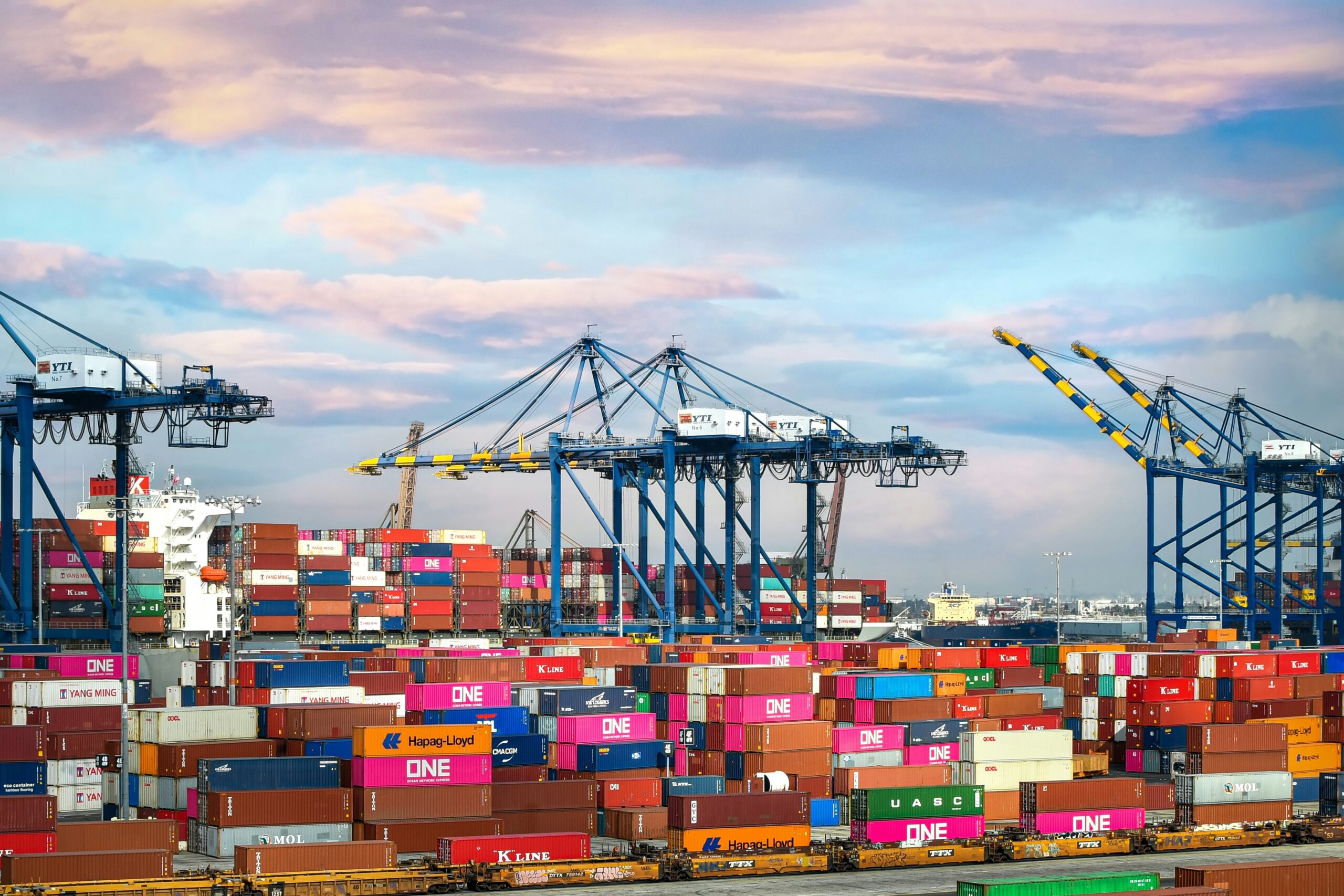
The economic impacts of the current crisis are already rippling through the global economy. The UK is acutely exposed. Critical parts of our economy are dependent on imports, the result of decades of underproduction and weak industrial capacity. We rely on international supply chains for energy, food, manufactured goods and industrial inputs. Even where production does take place domestically, much of the value added has been offshored, leaving a persistent ‘missing middle’ in the economy.
This vulnerability is compounded by extensive privatisation. Foundational sectors that provide goods and services that are essential to everyday life, such as energy, transport and water, are fragmented and run primarily for short‑term returns rather than long‑term resilience. Rather than acting as buffers in times of crisis, these systems can often pass global price shocks directly on to households and communities. At the same time, UK industrial strategy is increasingly shaped by international capital, with investment decisions driven more by global financial priorities than by local economic security.
Taken together, these repeated shocks force a fundamental question: what is the economy for, and how should it function in times of crisis as well as stability? At CLES, we start from a simple premise: the core purpose of the economy is to meet people’s needs, not to maximise profit or shield corporations from risk.
Resilience, in this sense, is not about returning to a tenuous status quo. It is about deliberately shaping local economic systems that can protect people from global turbulence and ensure access to essentials even when conditions deteriorate. Resilience does not happen by accident. It is not a byproduct of growth or market efficiency; it must be intentionally designed through ownership structures, supply chains, public services and democratic decision‑making.
Resilience is also uneven. Inequality weakens it. Places facing higher levels of deprivation, insecure employment, poor housing and underfunded services have far less capacity to absorb shocks. Strong social infrastructure, like public services, mutual aid and community networks,is not a ‘nice to have’ but an essential foundation of economic resilience.
The question, then, is not whether the next shock will come, but whether our local economies are set up to withstand it. This is why CLES champions interventions that build more resilient local economies.
Localising the production of essentials reduces dependence on imports and exposure to volatile global markets. This includes local renewable energy generation and municipal energy companies, as well as local food production and shorter supply chains. In transport, shifting from car‑centred systems towards active travel and public transport can significantly reduce household exposure to global oil price shocks.
Local institutions and community wealth building play a stabilising role. Institutions such as councils, health trusts, universities and colleges are firmly anchored to a place and unlikely to leave. Their procurement, investment and employment decisions help offset volatility elsewhere. Community wealth building approaches harness this power to improve job quality, strengthen supply chains and retain wealth locally.
Embedding democratic ownership structures, including public or community ownership, further increases resilience. These models that are less profit-led are also inherently less extractive and reduce the risk of profiteering during crises. Public provision also opens policy levers to insulate residents from hardship, including caps on energy bills or subsidised public transport.
The economic assumptions that underpinned the past four decades – cheap imports, stable geopolitics and steady growth – no longer hold. While the government’s emerging approach, often described as ‘Securonomics’, reflects a growing recognition that resilience matters, its ambitions fall short. A model that seeks growth by any means possible, combined with a lack of attention to democratic ownership, is likely to depend on ceding control of ever larger parts of the UK economy to US asset managers. Alongside this, newer forms of growth that permanently entrench extraction, such as data centres and build‑to‑rent housing, risk further ingraining inequality while doing little to strengthen resilience. At its worst, this has included investment from weapons manufacturers profiting directly from the war in Iran.
The present crises make CLES’s mission more urgent than ever. While conflicts such as the war in Iran may feel distant, their impacts will be felt in households, high streets and local services across the UK. The strongest protection we have is the resilience of our local economies – and we must invest in them now, deliberately and systematically, if people and places are to be secure in an era of accelerating global instability.
Want to make your local economy fairer and stronger? Talk to us – we’re here to help you make change happen.
For press enquiries please reach out to us on rosielockwood@cles.org.uk, or by calling 07802 453340
Contact us