Aligning community wealth building with just transitions
This workshop guide is the product of a major two-year international research partnership funded by the British Academy, led by…
“We can call time on trickle-down economics,” said Andy Burnham at CLES’s 40th anniversary in April. It was a good line. More importantly, it set a useful challenge.
For too long, the UK government has assumed that growth will automatically benefit everyone. It has not.
Burnham’s intervention matters because it links “good growth” to homes, work, transport and the cost of essentials. In plain terms, ending trickle-down means making sure the money, jobs and assets created in a place actually work for that place, instead of leaking away. At CLES, we call that community wealth building.
So when Burnham steps into Number 10 later this month, his first 100 days should turn that argument into delivery through the following actions.
Burnham should test all economic decisions against five questions: does it raise disposable incomes, improve job quality, reduce essential costs, retain wealth locally and narrow inequalities?
No 10 North cannot simply be Whitehall with a Manchester postcode. It must change whose ideas shape government, not just where decisions are made. Burnham should bring together progressive economic thinkers from across the UK to turn good growth into practical policy.
Local growth plans are being produced by English mayors and strategic authorities. Burnham should ask every local growth plan to include a living standards test: to raise real wages, improve job security, reduce housing and transport costs, connect residents to opportunity and reduce poverty.
Industrial strategy cannot be a prestige policy for high-growth sectors employing a minority of the workforce. It must address where millions work and where households experience the economy most directly: care, retail, hospitality, logistics and other foundational services.
Burnham has spoken about using public contracts to back British firms. He should go further. At present, NHS procurement is heavily centralised through NHS Supply Chain, which too often favours large national and multinational suppliers over smaller domestic firms rooted in place.
Burnham should work with NHS England, strategic authorities, universities and manufacturers to identify where NHS demand can support reusable, lower-carbon domestic supply chains, creating the businesses, jobs and industrial capacity Britain needs.
The promise of the biggest council housebuilding programme since the post-war period is welcome.
But council housebuilding should become a municipal industrial strategy, with funding ringfenced for public development vehicles such as council-owned housing companies and direct labour organisations that create homes, jobs, skills and public value.
A serious government would treat cold, damp and expensive homes as an infrastructure failure.
Burnham should shift retrofit from fragmented household grants to neighbourhood delivery: street-by-street upgrades, fair finance, trusted outreach and proper quality control.
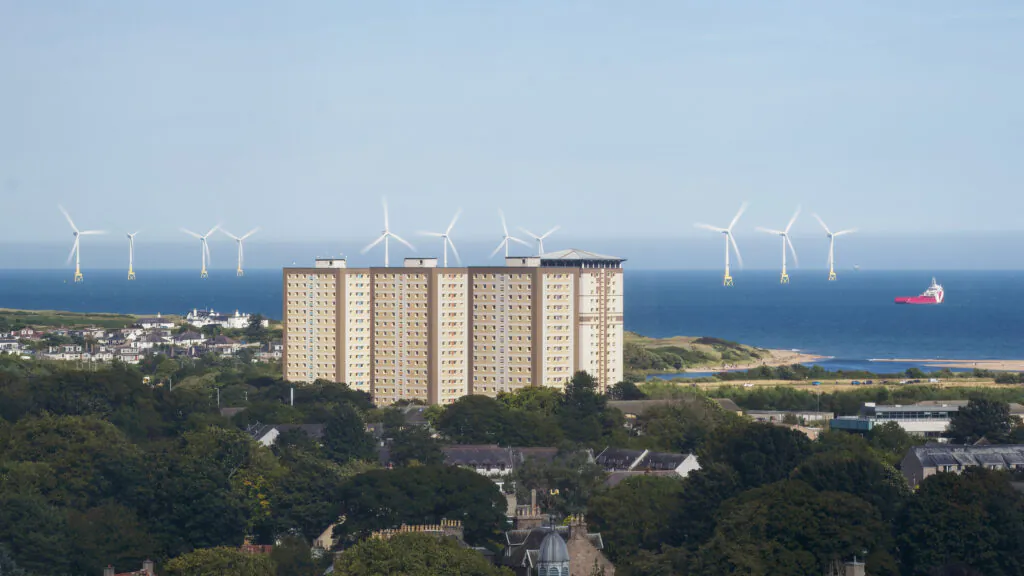
The energy transition cannot become extraction in green clothing. CLES research found Scotland’s onshore wind sector made an estimated £5.6bn in post-tax profits over five years, while communities received just £147m in benefit payments.
Burnham should require meaningful community ownership in new renewable developments, with some returns pooled into regional community wealth funds. Clean energy should mean lower-carbon power, local income and shared wealth.
The NHS, councils, universities, colleges and housing associations are major employers, purchasers and landowners. Yet their economic role is too often treated as incidental.
Burnham should support local and regional anchor agreements, setting out how public institutions will use spending, jobs and assets to support local procurement, fair work, targeted recruitment, apprenticeships, land use and public value.
Calling time on trickle-down economics means confronting ownership. Since the mid-1980s, CLES has argued that local economic development must be about who controls wealth, how it circulates and whether local people have a stake in it.
The government has made a start through its Co-operative Development Unit and support for community-led housing, but the approach remains too fragmented.
Burnham should turn this into a funded democratic ownership programme, extending beyond housing and food into energy, care and business succession. Public finance, procurement and commissioning should grow co-operatives, employee buyouts and municipal enterprises, while intervening where essential services are dominated by extractive ownership, particularly in social care.
The first 100 days will show whether Burnham intends to soften Britain’s economic model, or change its operating system. The question is not whether growth arrives, but whether government shapes it so that people, places and planet come first.
This article was originally published in LabourList.
Want to make your local economy fairer and stronger? Talk to us – we’re here to help you make change happen.
For press enquiries please reach out to us on rosielockwood@cles.org.uk, or by calling 07802 453340
Contact us